


Internal Family Systems
Internal Family Systems
By connecting with our core Self, the steady compassionate centre within us, we create safety for wounded parts to heal
By connecting with our core Self, the steady compassionate centre within us, we create safety for wounded parts to heal
I use internal family systems, a trauma-informed therapy model that understands symptoms like anxiety, shutdown, or self-criticism as protective parts of you – not flaws.
Instead of asking “what’s wrong with you?” we ask, “what happened to you?”
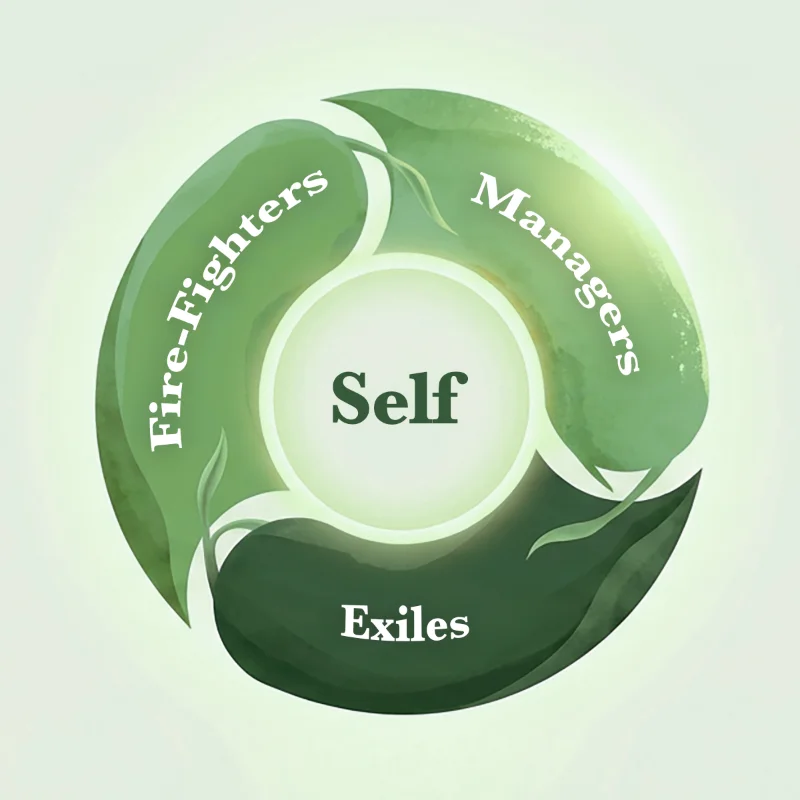
What is Internal Family Systems (IFS)?
IFS is a compassionate, evidence-based approach to therapy that helps us understand the different “parts” of ourselves. We all have parts that protect us, parts that carry pain, and a core Self that is calm, wise and grounded.
IFS is a compassionate, evidence-based approach to therapy that helps us understand the different “parts” of ourselves. We all have parts that protect us, parts that carry pain, and a core Self that is calm, wise and grounded.
How I work with IFS
How I work with IFS
IFS is an experiencial approach. In our work together we gently build a relationship with these parts so healing can happen from the inside out. This approach is especially powerful for trauma, because it honours your nervous systems protective responses rather than trying to fight them or eliminate them.
Internal family systems is based on the idea that we are not broken – we are layered Within each of us are parts that learned to survive difficult experiences. Beneath those parts is a deeper core Self or an authentic Self that holds clarity, compassion and calm and wisdom.
By connecting with our core Self, the steady compassionate centre within us, we create safety for wounded parts to heal.
My online counselling offers a flexible and accessible way to receive professional support from the comfort of your own home.
IFS is an experiencial approach. In our work together we gently build a relationship with these parts so healing can happen from the inside out. This approach is especially powerful for trauma, because it honours your nervous systems protective responses rather than trying to fight them or eliminate them.
Internal family systems is based on the idea that we are not broken – we are layered Within each of us are parts that learned to survive difficult experiences. Beneath those parts is a deeper core Self or an authentic Self that holds clarity, compassion and calm and wisdom.
By connecting with our core Self, the steady compassionate centre within us, we create safety for wounded parts to heal.
My online counselling offers a flexible and accessible way to receive professional support from the comfort of your own home.

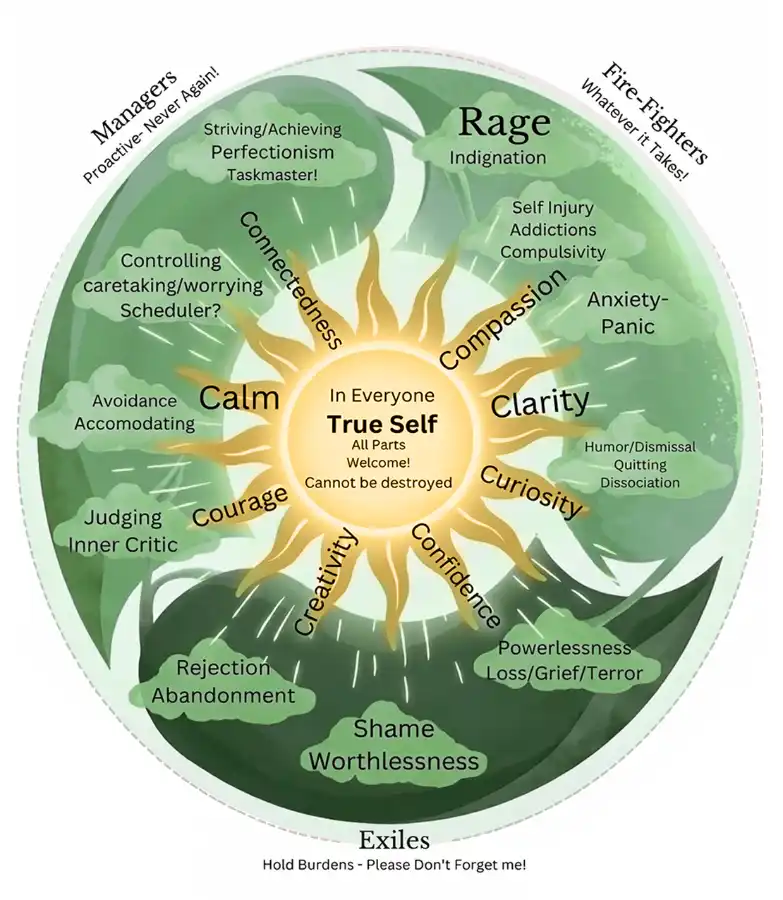
The Inner Dynamics of Internal Family Systems
Internal Family Systems (IFS) is a counselling approach that understands the mind as a system made up of different “parts”, each with its own thoughts, feelings, and roles.
Internal Family Systems (IFS) is a counselling approach that understands the mind as a system made up of different “parts”, each with its own thoughts, feelings, and roles.
At the centre of this system is the True Self, which naturally embodies qualities such as calm, curiosity, compassion, clarity, and confidence.
Within this inner system, some parts act as protectors. Managers try to prevent emotional pain by controlling situations through behaviours such as perfectionism, worrying, or people-pleasing. When difficult feelings break through, Firefighters react quickly to reduce distress, sometimes through anger, avoidance, addiction, or emotional shutdown.
Beneath these protective layers are Exiles, parts that carry painful emotions such as shame, rejection, grief, or abandonment. IFS therapy helps individuals become aware of these inner dynamics, approach their parts with curiosity and compassion, and allow the Self to lead the system. In doing so, wounded parts can release the burdens they hold, supporting healing and emotional wellbeing.
In practice, this approach is deeply somatic because it actively uses body awareness to access and understand different parts of the self.
Body sensations help you access parts faster
Rather than thinking about a part intellectually, clients are encouraged to notice a sensation, such as a knot in the stomach, follow it, and discover the part connected to it. In this way, the body becomes the entry point, closely aligning with techniques used in somatic therapies.
At the centre of this system is the True Self, which naturally embodies qualities such as calm, curiosity, compassion, clarity, and confidence.
Within this inner system, some parts act as protectors. Managers try to prevent emotional pain by controlling situations through behaviours such as perfectionism, worrying, or people-pleasing. When difficult feelings break through, Firefighters react quickly to reduce distress, sometimes through anger, avoidance, addiction, or emotional shutdown.
Beneath these protective layers are Exiles, parts that carry painful emotions such as shame, rejection, grief, or abandonment. IFS therapy helps individuals become aware of these inner dynamics, approach their parts with curiosity and compassion, and allow the Self to lead the system. In doing so, wounded parts can release the burdens they hold, supporting healing and emotional wellbeing.
In practice, this approach is deeply somatic because it actively uses body awareness to access and understand different parts of the self.
Body sensations help you access parts faster
Rather than thinking about a part intellectually, clients are encouraged to notice a sensation, such as a knot in the stomach, follow it, and discover the part connected to it. In this way, the body becomes the entry point, closely aligning with techniques used in somatic therapies.
Latest News
Latest News
Latest thoughts and research
Latest thoughts and research

A brief summary of IFS , working with parts and understanding our past trauma and wounding and how it impacts us in the present

Depression is a subject many people are cautious to address head on. Mostly for understandable reasons. Even labelling a condition can be traumatising in itself.

We begin to unburden negative beliefs about oneself and free parts from extreme roles.